Japan as an illustrated game board
At a Glance
My contribution: environment illustration and production artwork for the board and card imagery of Fernan Pires’s graduation project.
Challenge: turn a route through Japanese cities, landmarks, and cultural references into one readable game board without flattening it into a conventional map.
Outcome: a continuous illustrated world used across the printed board-game prototype, with location-specific scenes, card artwork, and presentation assets.
Japan as a Playable Journey
Kuizu was a board game created by Fernan Pires for his graduation project. My role was to illustrate the world the players would travel through. The board connects places including Tokyo, Kyoto, Osaka, Nara, Mount Fuji, Kamakura, and Itsukushima while keeping the route legible as a game surface.
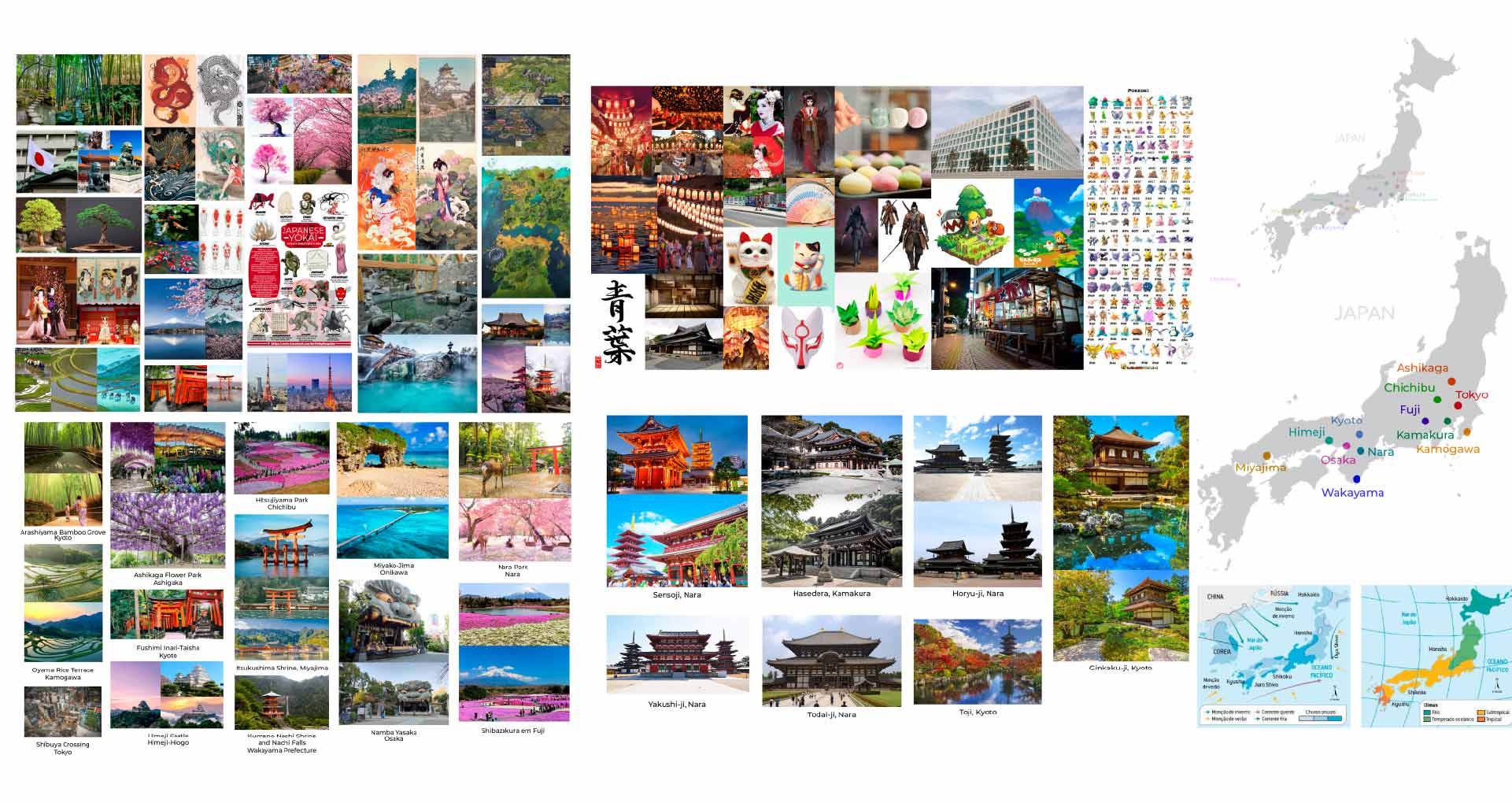
The reference board combines maps, landscapes, architecture, creatures, and everyday cultural details.
A Map That Behaves Like a Landscape
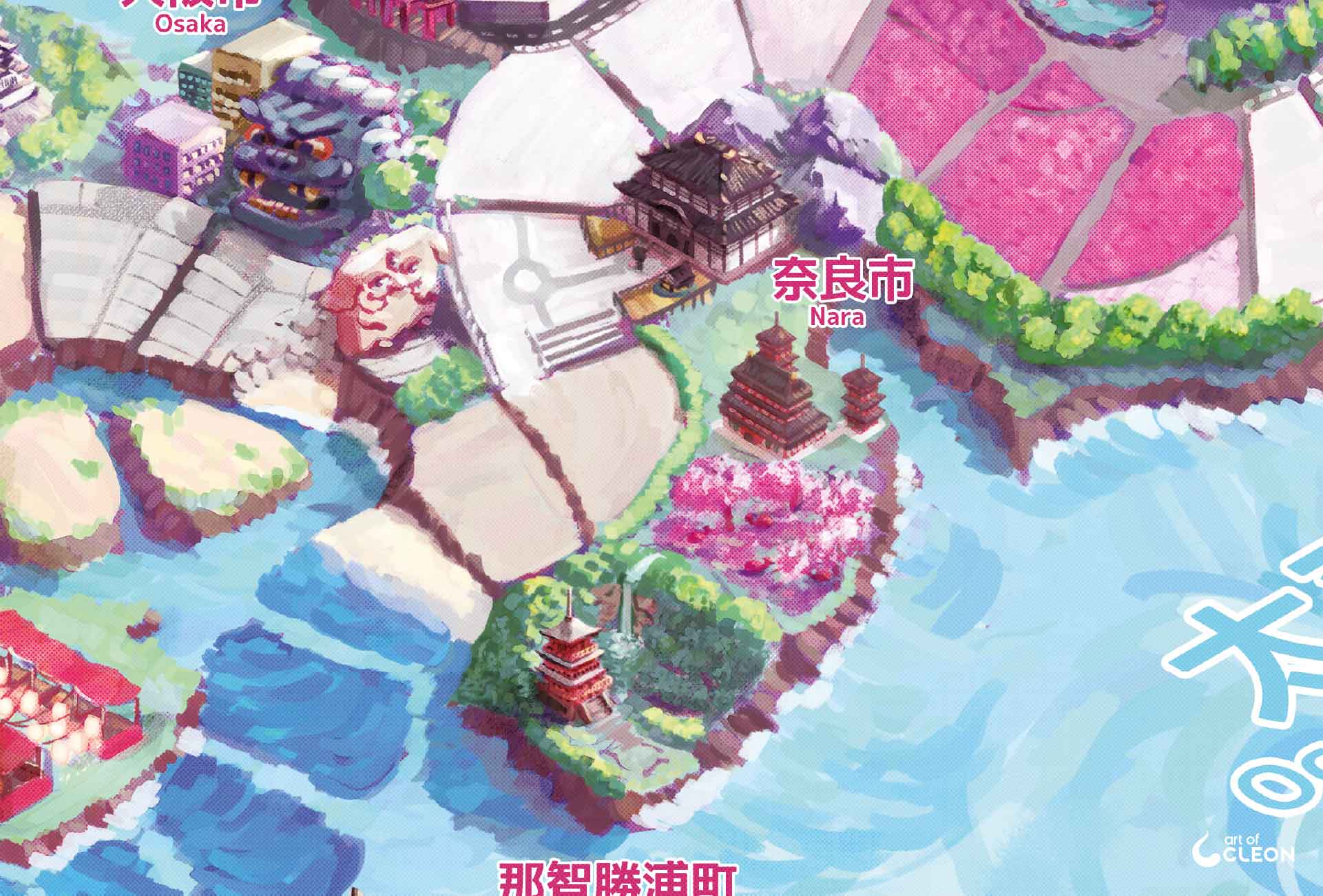
Instead of drawing the board as a flat diagram, I treated it as a continuous environment seen from above. Cities become clusters of recognizable structures; fields, mountains, forests, bridges, and coastlines separate the regions. The route stays visible because its pale spaces cut through denser painted areas.
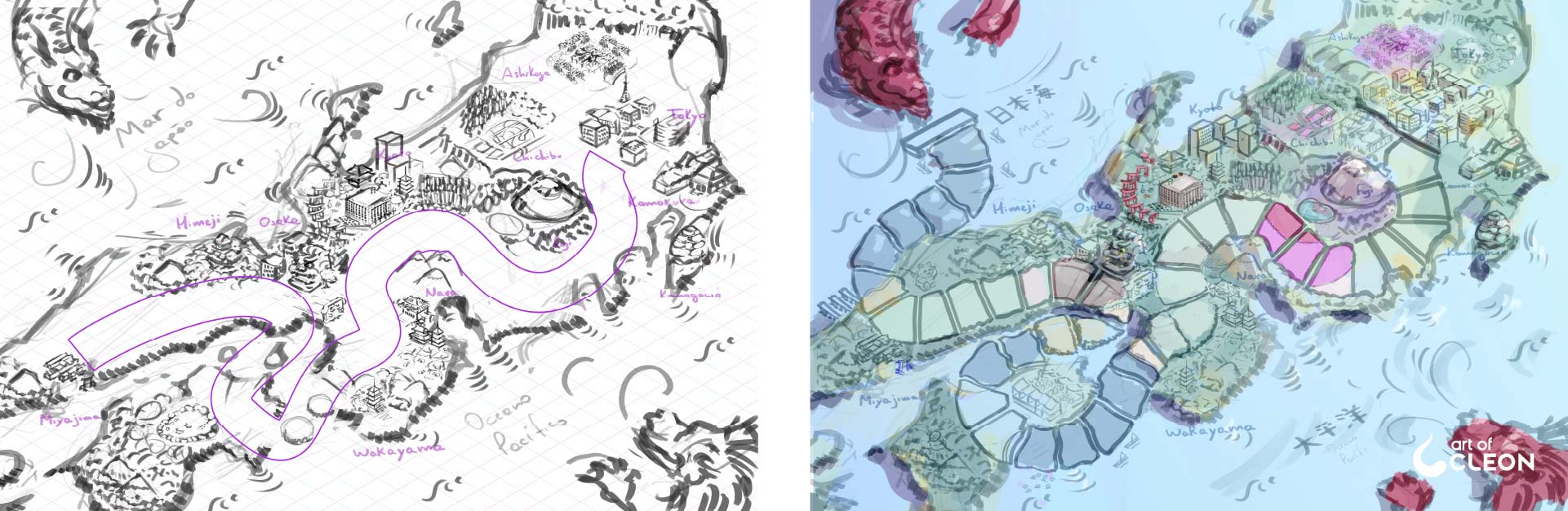

The route is established early, then the terrain and landmarks grow around it without covering its function.

One World Across Board and Cards
The palette links the different regions with cool water, fresh greens, pale stone, and saturated pink-red accents. Large creatures entering from outside the board keep the edge active and make the island feel like part of a larger illustrated world.


The final board and cards repeat the same atmospheric color and brushwork at different scales.
From Illustration to Prototype
The physical prototype tested the artwork in its real context: folded into a box, surrounded by pieces, and handled as a deck of cards. The photos also show where illustration yields to typography, rules, and game components.
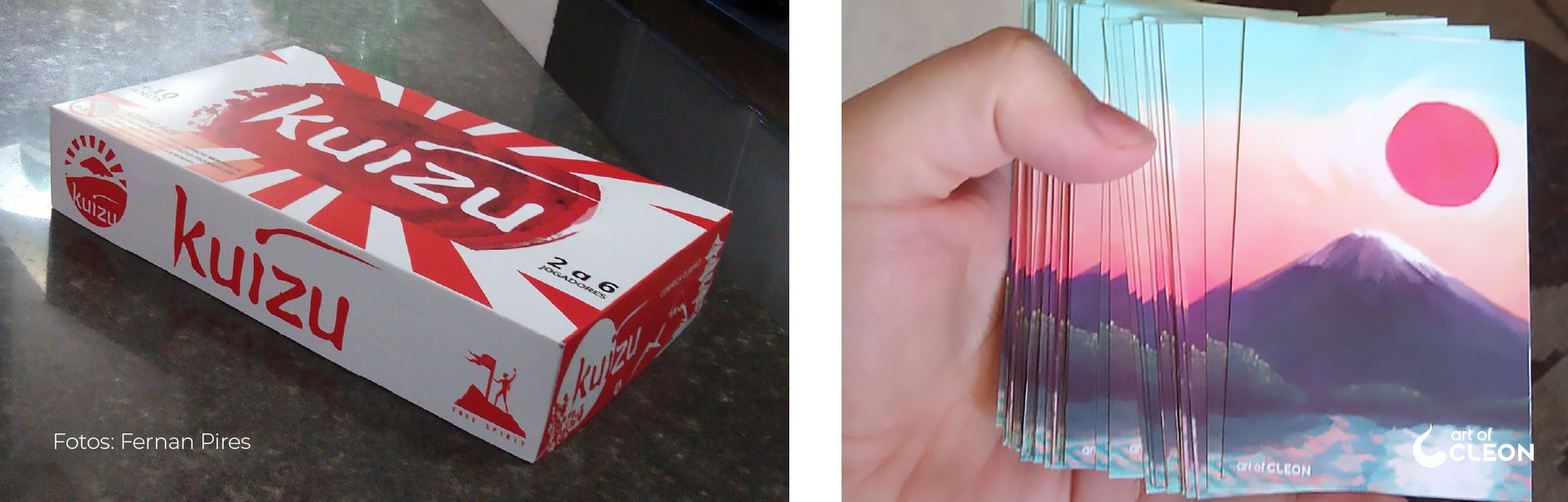
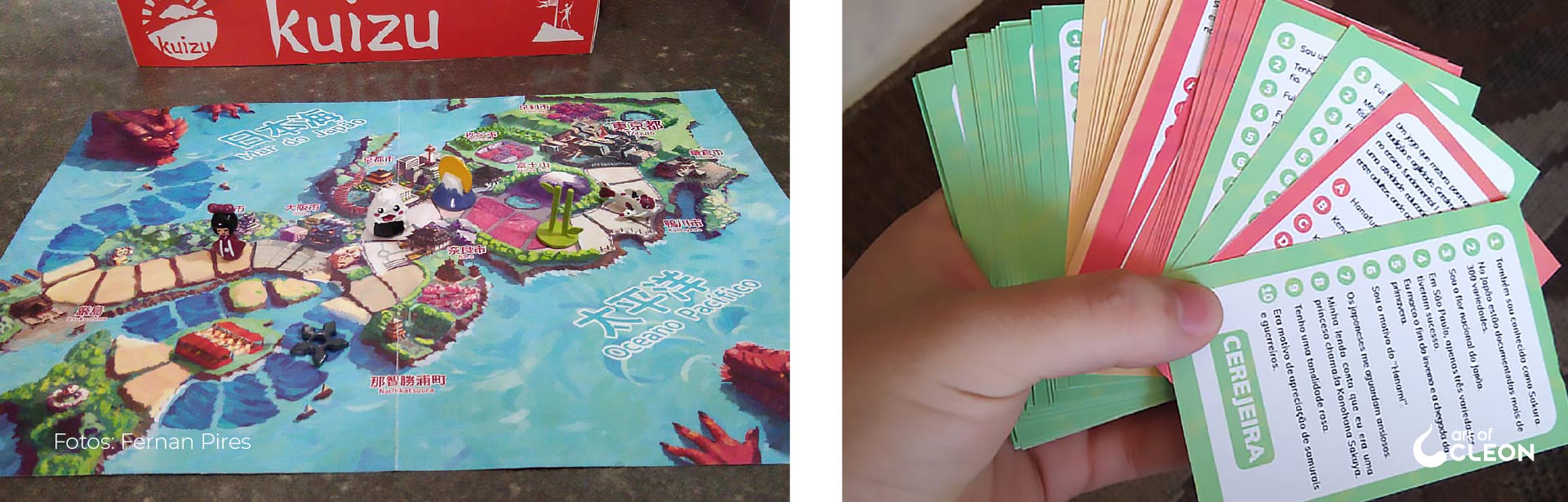
Prototype photography by Fernan Pires.